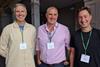
The British trade body’s Annual General Meeting has been a great indicator of its national waymarks: it marked the speech from the Prime Minister about putting the country into lockdown, it was the first gathering I attended post lockdown, while this week, it marked the death of the monarch – however, these headline-grabbing events have meant that the quality of the content has been hidden to those who did not attend. The event is more than the sum of the parts; the highlight to most attendees is the quality of the conversations between participants.
The OIA has now had Andrew Denton at its helm for a decade, a period that has seen the event grow larger each and every year reflecting the organization’s growth. Denton was brought in to revitalize the national governing body that used to provide only some membership services (like organizing a trade exhibition); he has led the transformation into a major force for good in the outdoors. This was most visible during the recent lockdown restrictions when the Prime Minister recommended that we all stay at home – but get out for daily exercise to both keep our physical body and mental approach as he took on the lobbying message that the OIA had given him. By being the connector between many NGBs ranging from canoeing and cycling to Outward Bound and the National Trust, the OIA became a one-stop point for focused work.
Denton has also been one of the leaders of the EOG’s Its Great Out There direction – which has taken on the task best represented by the European Week of Sport to get more active outdoors, so many of these traits are embedded in the organization. Hence, several papers from this year’s event represented the Diversity and Inclusion subjects, which also highlighted how the outdoor culture has not always been the most welcoming or representative of the audience. Like so many other activities, the majority of the audience was white, middle-aged and able-bodied males, which creates a barrier. The OIA board has been trying to change this; indeed, progress is in motion with the female representation growing, and they know where else concentration needs to happen as, without heroes to look up to, there is little inspiration for other participation.
The event in Sheffield started with a range of activities to join in: a cycle, run, walk, or a bouldering session. This is a wonderful way to break the ice between strangers and remind all of the beneficial effects of outdoor exercise. The conference itself started early afternoon with the formal work of the Community Interest Company revealing its record for the previous year by the current chair, who revealed the changes to the board of directors; followed by the development board chair highlighting the newer progress towards objectives in environmental, diversity & inclusion, plus communication drives. Statistics showed how outdoor participation is around 54/46 percent split on sexes, but at the executive level in the industry, it is a 74/26 split, and at the board level, it is 80/20. This can be compared to FTSE 350 companies with a 95/5 split – but they have plans to raise balance their numbers better: do outdoor companies? The drive to net zero for 2030 continues with a push for the industry to have an overall impression of its Tier 1 carbon footprint before stretching to Tier 2: without knowing where you start, it makes progress hard to record. In terms of communication tools, there has been a successful drive at both internal and external channels ranging from weekly newsletters for the former to campaigns to highlight the range of outdoor activities.

The other presentations that day came from the findings from insight into the Snow Peak brand’s successful launch in the U.K.; the Camping and Caravanning Club on consumer research; Charles Ross on the sustainability question of the consumption model (and the detail of the incoming EU Green Deal alongside the actual problem associated to the Higg Index); in addition to Suzanne Shaw – a chart-topping popstar who had turned to run to combat the mental pressures of her public role. The day ended with the OIA Awards, whose nominations had been revealed at the summer’s Outdoor Trade Show exhibition and had now been voted on by the public. There were ten category winners, plus one of those became the Product of the Year winner – the Rab Mythic Ultra.
The format of the day then saw a communal meal and socializing before starting again the following morning with a choice between yoga or a ride. Andrew Denton began the presentations with an overview of the broader issues the OIA was dealing with (and the progress it had made). The U.K. outdoor economy is worth £20 bn = 1.65 percent of the GDP; it falls within tourism as a segment, where that category is the sixth largest industry in the country. The lobbying also stretched into the health & sports departments of the government.
The timing of the event had moved to the autumn to coincide with when Covid restrictions had been relaxed last year, but the proposal was to move it back to the spring – but this time immediately before the National Outdoor Expo was staged in Birmingham; the OIA would be located nearby to encourage more of the business audience to attend the consumer show the following day. Hence, dates for 2023 were set as March 16 to 17.
The remaining four presentations all delved deeper into the themes of the event: there was an update from partner NGOs that shared the aim to get more people active outdoors; detail from Will Pike on accessibility problems (especially the information side) for disabled participants; looking at the welcome through the lens of non-white groups; the development network of walking routes connecting communities nationwide; as well as an overview from three outdoor companies who had changed the status of their companies to employee-owned trusts to manage their future direction once their founders had stepped back from the business that wrapped up the gathering.